Rick Gore
Rick Gore / Work / Avalara
Avalara

We didn't redesign assets.
We redesigned expectations.

How I turned a two-person production shop into a twelve-person creative function that marketing actually depended on, and built the systems to make it run.

Client
Avalara, Seattle WA
My role
Creative Director — team build, systems, campaigns, brand
Tenure
2020 — 2024
Disciplines
Team Architecture · Creative Operations · Campaign Strategy · Brand Systems · Content Design
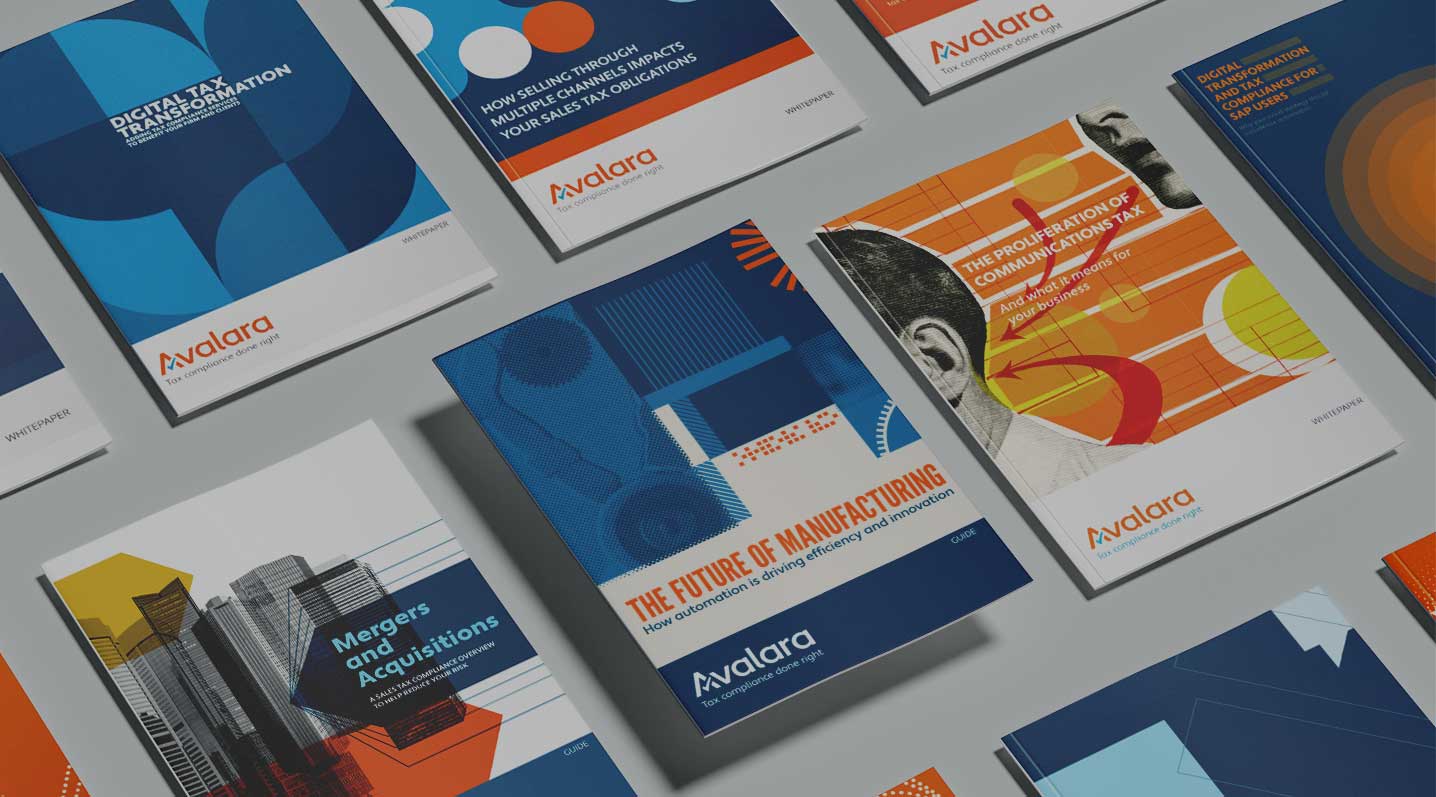
Avalara ebook cover system — a library of publication covers showing range and visual consistency
A portion of the ebook library produced under my creative direction. Each cover is distinct. All of them are unmistakably Avalara.
212
Team members. Built from scratch over four years.
50+
Full-stack campaigns launched, consistently above industry CTR benchmarks.
160pg
The ATC report at full build. It started as a 10-page bulletin.
45
Full-stack campaigns running simultaneously at any given time.

When I joined Avalara in 2020, the creative function was two people: a production artist and an illustrator. There was no creative director, no strategy, no process. Marketing requests came in through an online form. Someone would fill it out and two days later an ad came out the other end, if it came out at all. Prioritization was whoever asked loudest. The work looked like it.

There was no common visual language. Some outputs used whimsical illustration. Others were photo-based. Typography was unconsidered. Copy was written by whoever needed the asset, which meant brand voice was whatever a product manager typed up that day. Creative was a vending machine, not a function.

Fix the infrastructure. Then fix the work.

Before any of the work could improve, the system had to function. I started by interviewing every stakeholder and mapping every type of request the team received. From that I built SLAs — realistic timelines by project type that set expectations on both sides and ended the constant triage.

Then I went on an internal road show. The argument was simple: unified messaging across business lines is a force multiplier. When one product team builds a campaign, those assets can be leveraged across every other team. Before that conversation, Avalara's marketing was random acts of creativity. After it, we had brand-wide strategy.

Creative treated as a support function. Reactive, brought in late, disconnected from strategy.
Creative embedded as a strategic partner. In the room early, accountable to outcomes.
No intake process. Unclear priorities. Constant triage and reprioritizing.
Standardized SLAs and intake. Most important work rose to the top automatically.
Two overextended generalists juggling too much with no clarity or support.
A twelve-person team with defined roles, ownership areas, and a shared culture.
Every asset started from scratch. Inconsistent, unscalable, unpredictable.
Modular systems brought speed, consistency, and brand confidence across every channel.

Anton: a live view of everything in flight.

With the team building and the SLAs in place, my traffic manager and I built what we called Anton — a live Gantt system populated with every team member, every active project, every upcoming request, and every estimated completion time. Anton was public. Any PM could open it at any moment and see exactly what was in flight, what was coming, and when their work would be done.

It eliminated the emergency culture entirely. A weekly inflight meeting with all marketing leads kept the system honest. If someone needed to reprioritize, we did it in the room, with all parties present. The "I have an emergency, drop everything" dynamic stopped because everyone could see the same reality at the same time.

Anton also let me load-balance work to the team member best suited for it. The right project went to the right person, consistently. That's how you build a team that gets better over time rather than just busier.

Once the machine was running, elevate what it produced.

The approach to advertising was rebuilt from scratch. Benefit-first messaging, tighter design systems, consistent brand voice. We ran 50+ campaigns during my tenure, consistently outperforming industry benchmarks on CTR. A full-stack campaign at Avalara meant a webinar, an ebook tied to it, paid and social ads driving to both, a social-share infographic pulling highlights, and an email sequence driving the whole funnel. We ran four to five of these simultaneously at any given time.

Avalara advertising before and after — left: prior creative, right: benefit-first redesign
The same brand, four years apart. Left: prior to my involvement. Right: benefit-first messaging, concept-driven creative, performance-tuned.
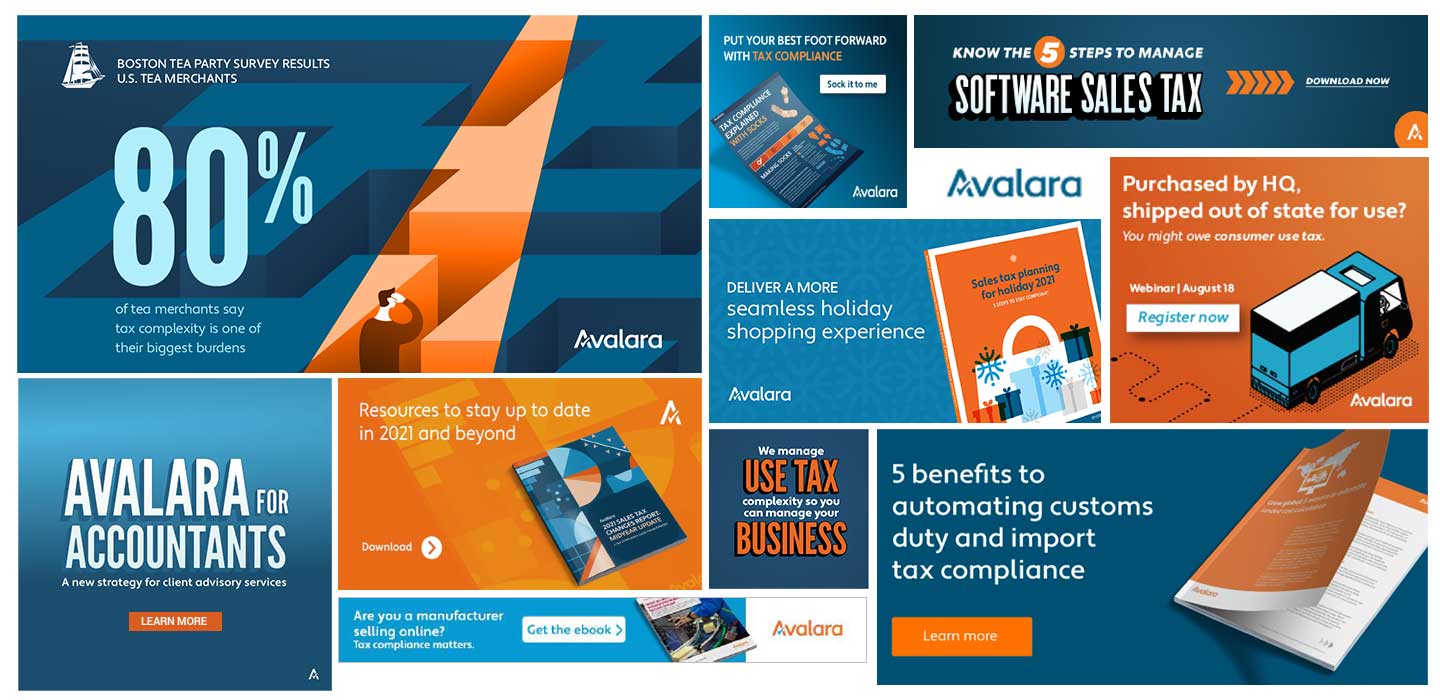
Avalara campaign ad grid — multiple formats, multiple campaigns, consistent brand system
A cross-section of active campaigns. Four to five full-stack campaigns running simultaneously was the norm, not the exception.

A 10-page bulletin became a 160-page publication.

Avalara's Annual Tax Changes report was the clearest example of what the function became capable of. I inherited a dry, functional bulletin. Over four years, my team transformed it into a 160-page flagship publication with over 100 custom charts and infographics — Avalara's most important marketing asset by their own account, and the standard for thought leadership in the compliance industry.

"ATC is our premier asset and flagship program across all of marketing. The engine behind this is our core ATC team, whose insight, extensive research, content prowess, and endless hours will help define our success."

— Avalara Marketing Leadership

The report became a backbone marketing asset, used for demand generation, thought leadership, retention, and as a brand showcase. We printed the best ebook covers as screen-printed posters and sent them to clients as gifts. That's the distance we traveled from "make this pretty."

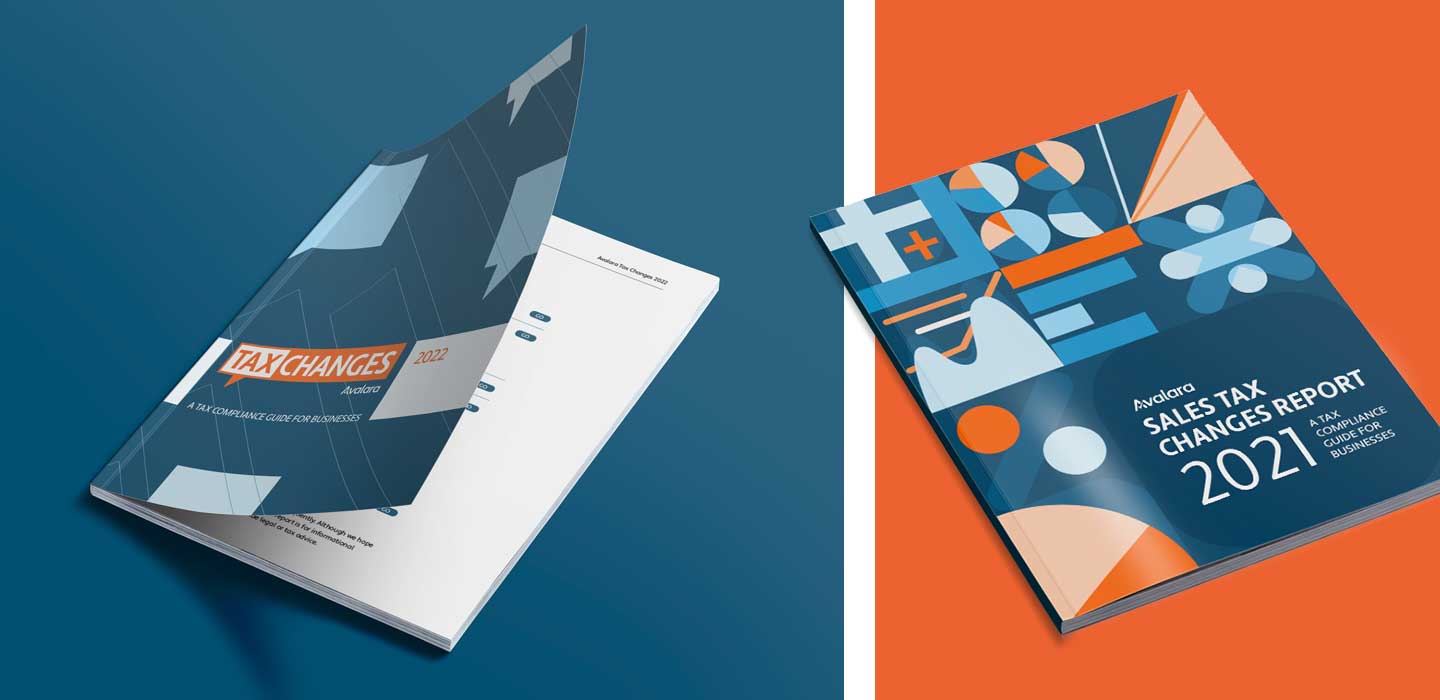
Avalara Tax Changes report covers — 2021 and 2022
Two years of the ATC report cover. Each year a distinct visual identity, each one part of a coherent publication system.
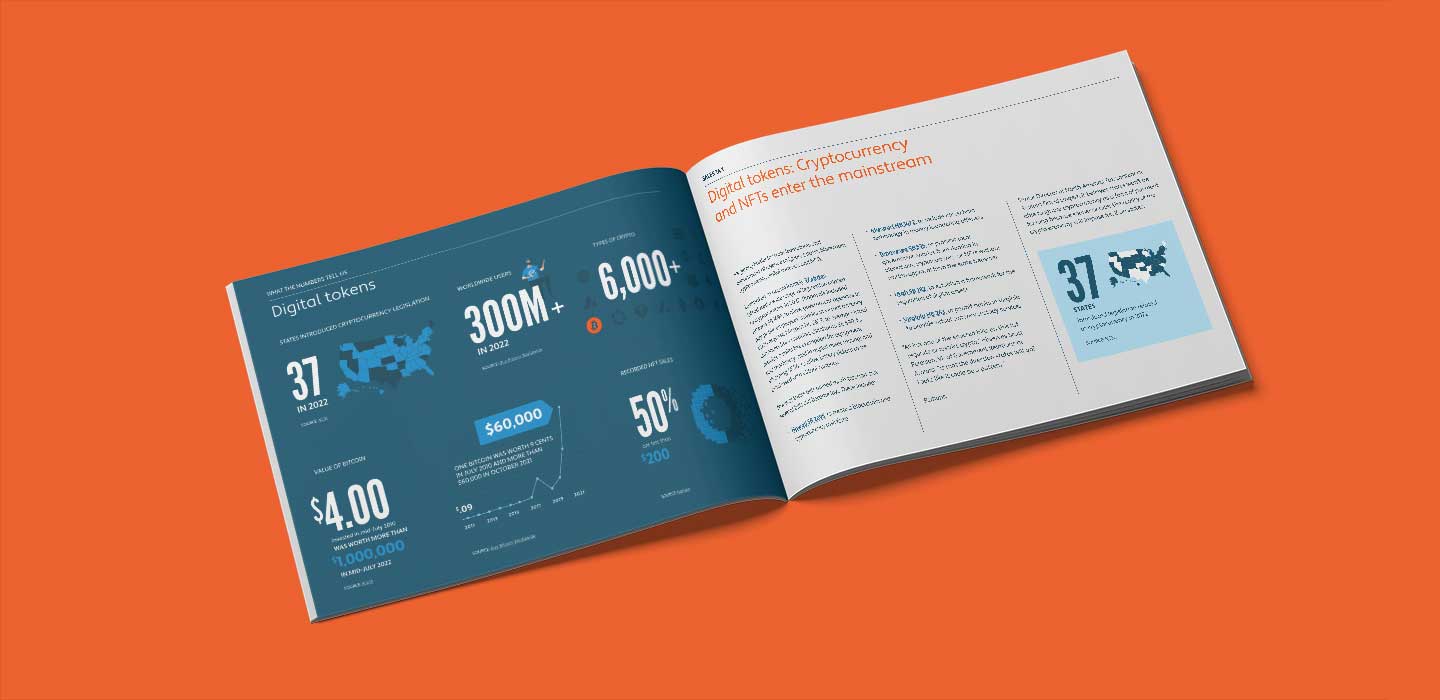
Avalara Tax Changes interior spread — cryptocurrency section with full-page infographic
Interior spread. This is what 100+ custom charts looks like in practice — dense data made readable, on-brand, and worth keeping.
The full publication
The ATC report, flipped through. 160 pages. 100+ custom charts. Published annually.

A vending machine became a business unit.

I left Avalara with a creative function that bore no resemblance to what I found. Twelve people. A system that ran without constant intervention. Campaigns that performed. A flagship publication that defined the company's authority in its category.

The shift that mattered most wasn't the headcount or the output quality. It was the relationship. Creative stopped being something marketing ordered and started being something marketing relied on. The team had a seat at the strategy table because it had earned one.

That's the work. Not making things prettier. Making the function matter.

Four years
212

From two overextended generalists to a full-stack creative team with defined roles, operating systems, and a culture built to sustain quality at scale.

Next case study
Icertis: Warm brand in a cold category